
Scissor Lift Rentals for Durham Jobsites and Facilities
Elevated work becomes much easier to plan when the equipment is selected around the job rather than around a model number. Durham Scissor Lift Rentals helps customers evaluate scissor lifts and closely related aerial-access equipment for construction, installation and building-maintenance work throughout Durham and the surrounding area.
Durham projects can involve research and technology facilities, healthcare buildings, commercial construction, warehouses and institutional properties. The operating environment can change substantially from one property to another, so the same lift is not automatically appropriate for every job.
A scissor lift is most useful when the work is mainly above the machine. The platform rises vertically, giving workers room for tools and materials without requiring the horizontal outreach of a boom lift. Before renting, consider the actual working height, operating surface, access width, platform needs and whether anything prevents the machine from sitting below the task.
Call (919) 891-3392 and describe the job rather than guessing at a machine size; height, surface and access details are the best place to start.
Electric Scissor Lift Rental
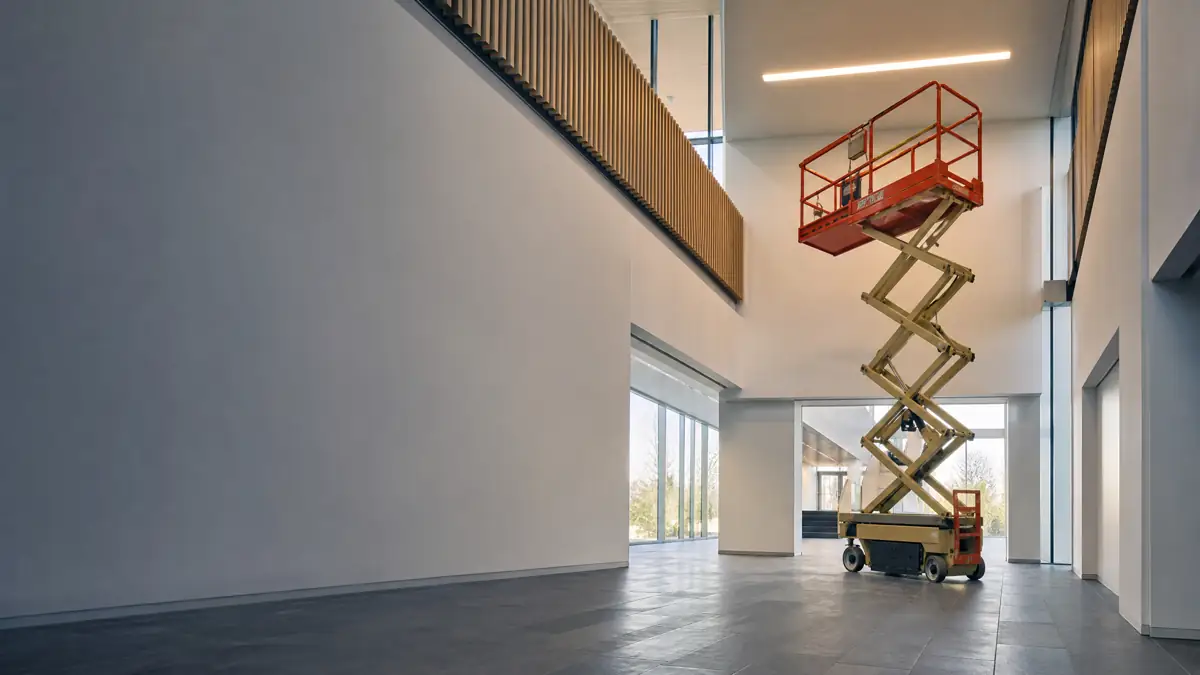
Electric scissor lifts are commonly used on suitable finished surfaces inside warehouses, commercial buildings, manufacturing properties, retail spaces and institutional facilities. Compact machines can be particularly useful where the route to the work includes doors, aisles or limited turning space.
Typical applications include lighting, electrical conduit, HVAC work, fire protection, security cameras, ceiling work, signage and interior buildouts. Battery-powered operation also avoids direct engine exhaust, an important practical consideration inside many occupied buildings.
See the Electric Scissor Lift Rental page for access and sizing considerations.
Rough Terrain Scissor Lift Rental
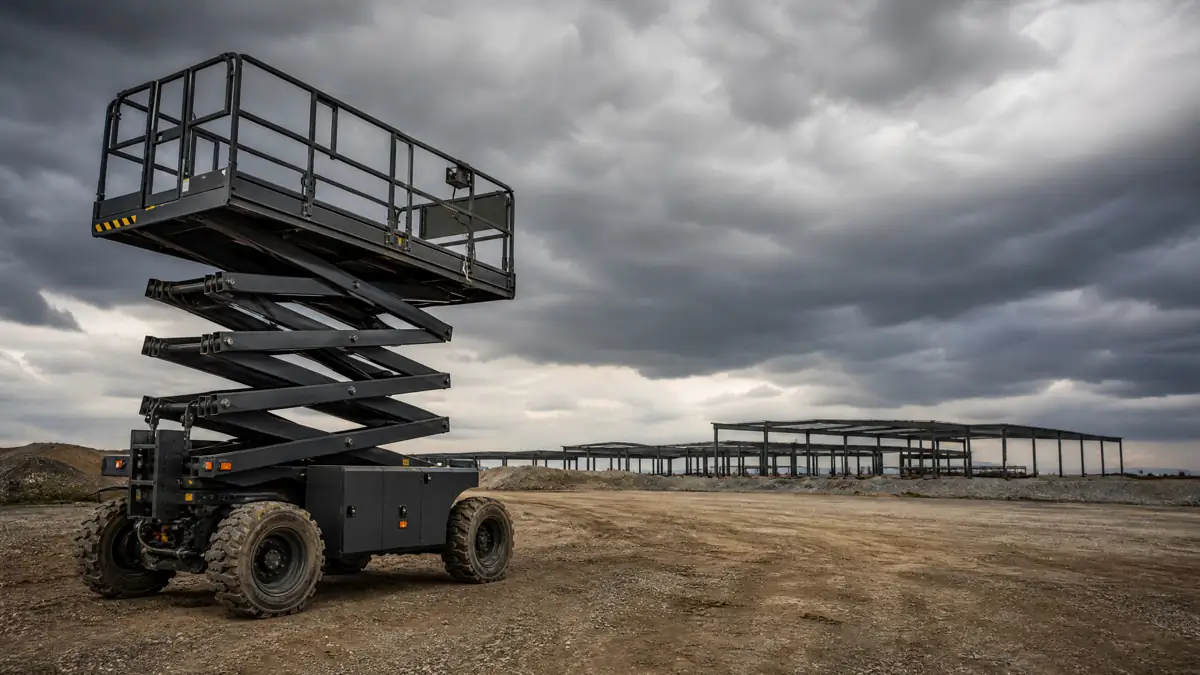
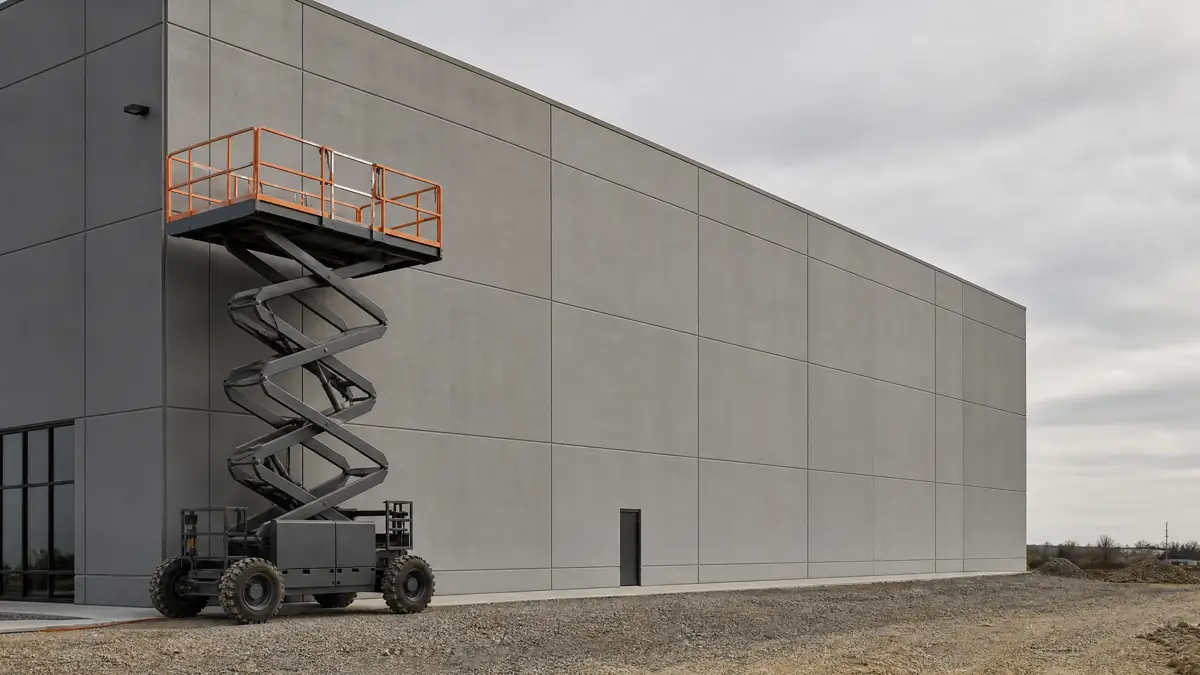
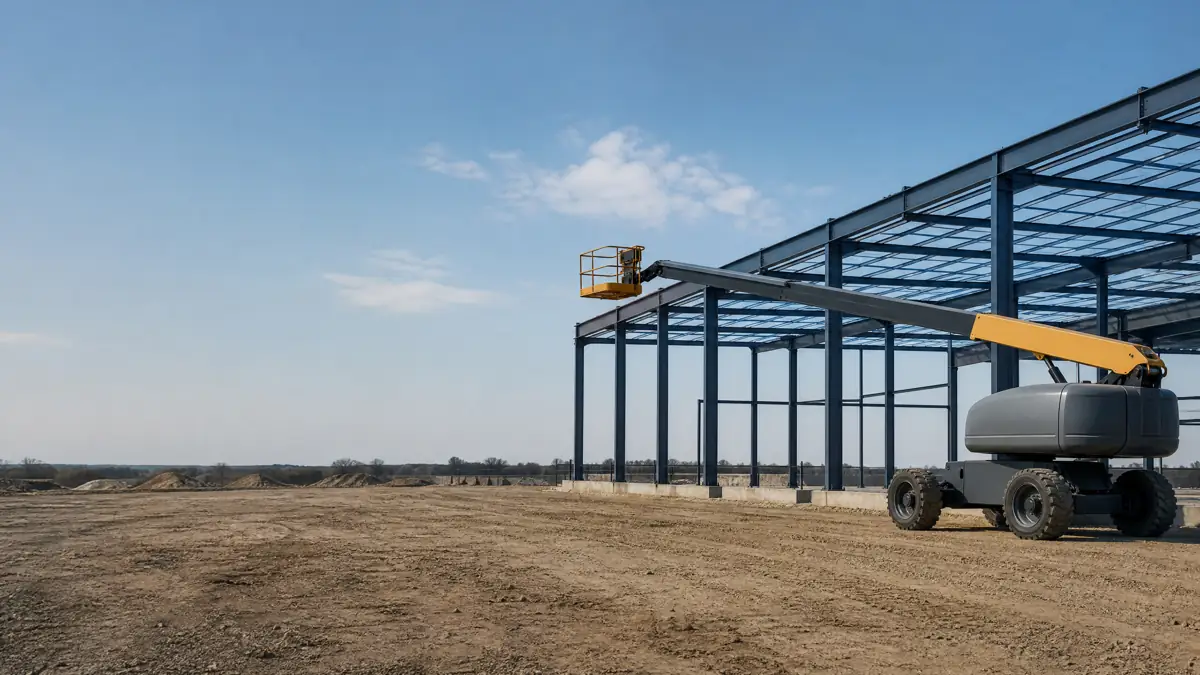
Outdoor construction introduces different demands. Rough-terrain scissor lifts are intended for many jobs where the surface is unfinished and greater ground clearance or outdoor capability is needed. Typical projects include exterior installation, new commercial construction, structural work and industrial maintenance.
The phrase “rough terrain” should never be treated as permission to ignore site conditions. Soft soil, excessive slopes, holes, standing water and unstable fill can make an otherwise capable machine unsuitable until the work area is corrected.
Platform Height vs. Working Height
Platform height describes approximately how high the platform itself can rise. Working height estimates the elevation a person standing on the platform may be able to reach. Confusing the two can lead to renting more machine than the job requires—or not enough.
Common rental classes may include roughly 19-, 20-, 26-, 32-, 40- and 45-foot platform heights, but availability varies. Taller is not automatically better because machine width, weight, turning clearance and transportation requirements may also increase.
Scissor Lift or Boom Lift?
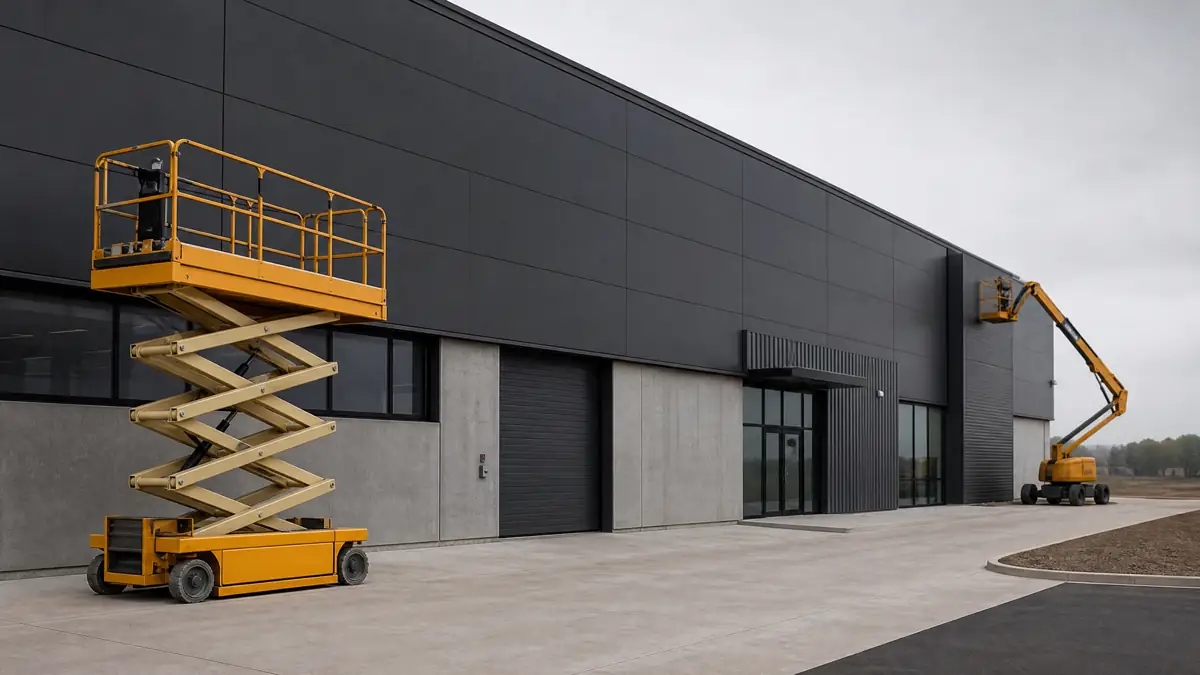
Use the geometry of the work as a guide. When the machine can sit underneath the task and workers mainly need to go up, a scissor lift is often worth considering. When the work is above and away from the base—or behind an obstacle—a boom lift may be more appropriate.
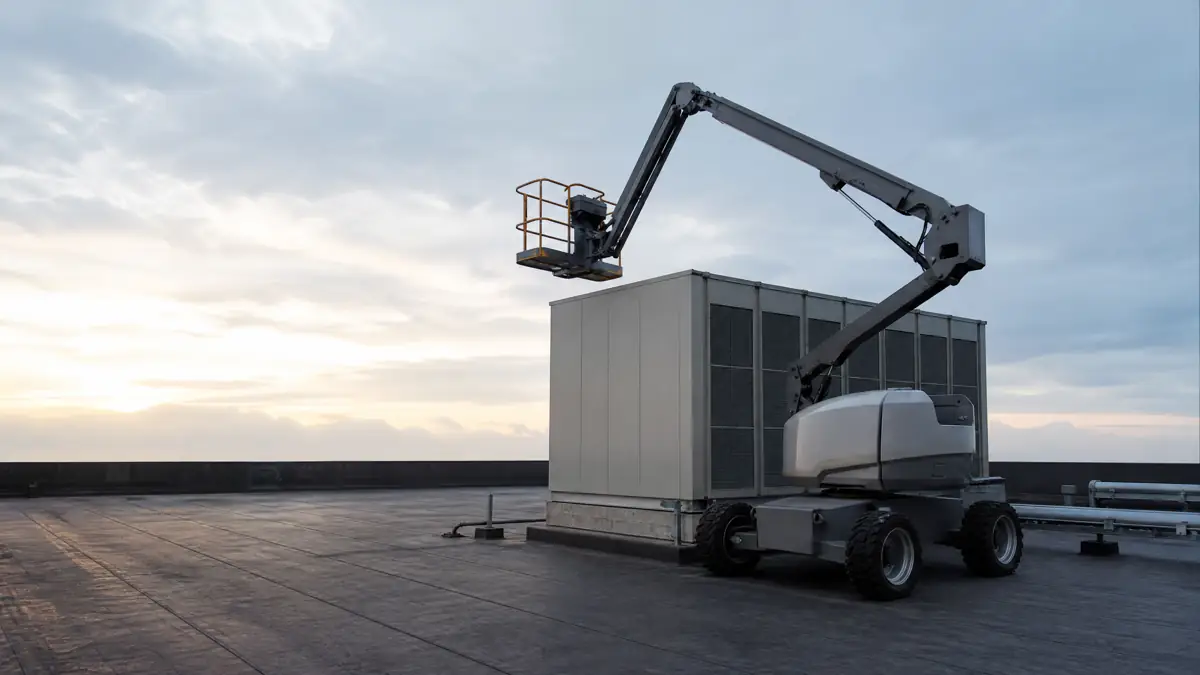
Explore Boom Lift Rental, Articulating Boom Lift Rental, and Telescopic Boom Lift Rental for horizontal or up-and-over access.
Commercial and Industrial Applications in Durham
Durham projects can involve research and technology facilities, healthcare buildings, commercial construction, warehouses and institutional properties. The operating environment can change substantially from one property to another, so the same lift is not automatically appropriate for every job. That mix creates many elevated-access tasks, including overhead electrical work, HVAC installation, lighting, fire-protection systems, maintenance, signage, structural installation and tenant improvements.
A warehouse may favor a narrow electric slab machine, while an active outdoor construction site may call for a rough-terrain unit. An industrial property with installed machinery may require a boom lift if workers cannot position directly below the task.
What to Know Before Calling
Have these details ready when possible:
- Project address or ZIP code
- Indoor or outdoor use
- Approximate height of the work
- Floor or ground conditions
- Narrowest doorway, aisle or access point
- Whether horizontal outreach is required
- Expected rental duration
- Type of work being performed
You do not need to know an exact model number before calling. These job details are usually more useful.
Frequently Asked Questions
What size scissor lift do I need?
The answer depends on working height, platform requirements, machine access, operating surface and the position of the work. Measure the task itself rather than choosing only from an advertised lift height.
Can I rent a scissor lift for indoor use?
Electric slab scissor lifts are commonly used indoors on suitable finished surfaces for maintenance, construction and installation work.
Can scissor lifts be used outside?
Some are designed for outdoor applications. Rough-terrain models are common on appropriate construction surfaces, but site conditions still matter.
What is the difference between a scissor lift and a boom lift?
A scissor lift primarily provides vertical platform access. A boom lift adds horizontal positioning and can be better when obstacles prevent direct access from below.
Can equipment be delivered to a Durham jobsite?
Delivery options depend on equipment, project location and current availability. Have the job address ready when requesting rental information.
Call About a Durham Scissor Lift Rental
Call (919) 891-3392 and describe the job rather than guessing at a machine size; height, surface and access details are the best place to start.